




The facts
Injuries to the cranial cruciate ligament in dogs are the most common orthopaedic problem found in dogs. Most dogs that rupture this ligament do so because of degenerative disease in the joint.
Almost all animals with injured cruciates are better managed with surgery than without. The ligament never heals once it starts to degenerate; it just continues to degenerate until it finally snaps. Snapped cruciate ligaments never heal.
There is a wide range of surgical options available for treating cruciate injuries. The more basic technique involves placing a restrictive band of some form that attempts to replace the function of the lost ligament. The more complex, but generally more effective, techniques involve altering the bone structure to change the forces acting on the joint.
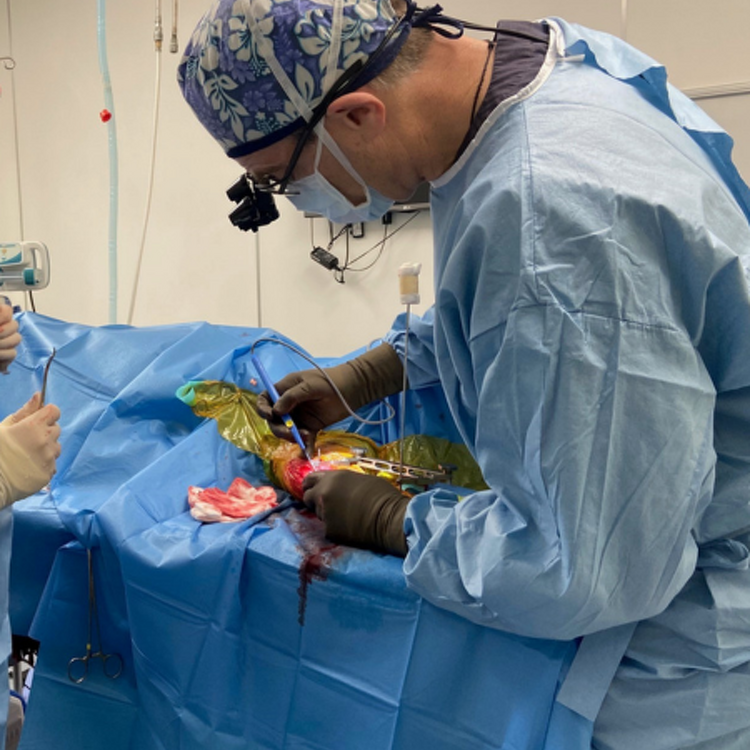
TPLO (Tibial Plateau Levelling Osteotomy)
This involves changing the anatomy of part of the tibia, then securing it with a bone plate and screws. This neutralises the forces previously resisted by the cruciate ligament.
Return to normal function after surgery can be dramatically faster than with the traditional nylon band technique.
This is the most successful technique for normalising forces around the joint and has statistically the best long-term outcomes. We can now offer this surgery for dogs of almost any size, including small breeds.
TPLO is an operation with a long history of success worldwide. This is the “gold standard” surgery in specialist practices worldwide for cruciate ligament injury. If the joint is suitable for this procedure and finances permit, this would be our recommended first-choice surgery, where possible.
Lorem ipsum dolor sit amet, consectetur adipiscing elit. Duis dui sem, egestas ac risus eu, tristique sodales erat. Donec eget molestie augue. Nunc turpis libero, rutrum nec lacus quis, rhoncus congue libero.
Extracapsular surgery
This was traditionally the most popular surgery, in which a single or double strand of nylon or Fiberwire is inserted to try to replace the function of the original cruciate ligament. This can lead to good function, but results can be highly unpredictable. Recovery times from surgery can be prolonged. This is a fair option for small dogs, not very good for medium dogs, and not recommended for large dogs.
This technique is simple to perform and avoids the risks associated with cutting bone during TPLO. However, the nylon will stretch over time, and ongoing support depends on periarticular fibrosis rather than removing abnormal movement, which the TPLO achieves. Ironically, while this technique is most commonly performed on small breeds of dogs, these breeds often have extremely short legs, which make them poor candidates for extracapsular surgery; they generally do much better with a TPLO.
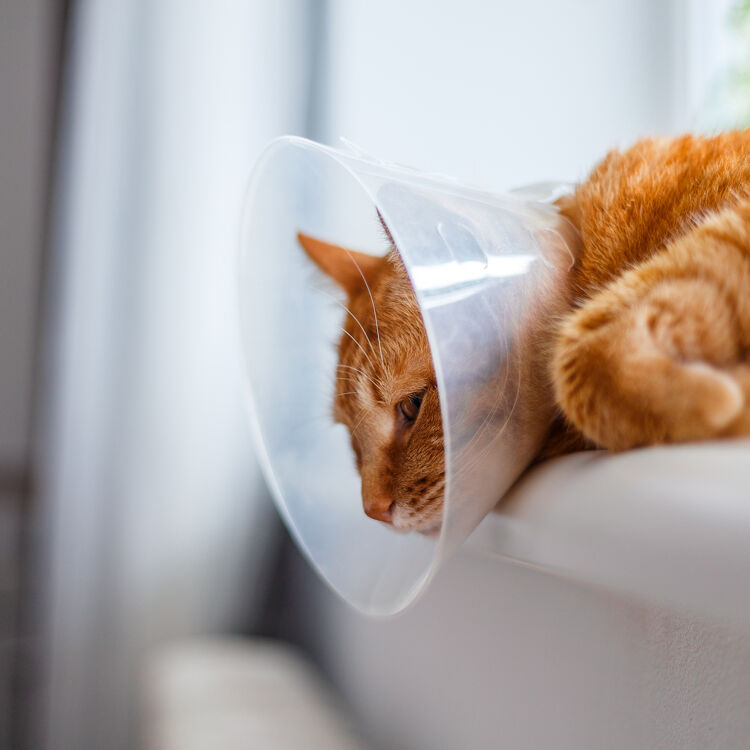
Our recommendation for managing cruciate injury in dogs is:
TPLO is the best available surgical option and should be the first choice if the bone shape permits and finances are available.
Extracapsular surgery is a cheaper option for small-breed dogs but is significantly less successful than the TPLO.
Dogs with previous extracapsular nylon surgery with unsatisfactory results can have a TPLO as a revisional procedure.
For dogs with very abnormal tibial anatomy or a dislocating patella, modifications to these techniques can be made to manage the condition better.
Many dogs now have had both knees operated on and returned to running and working. A dog who ruptures both cruciate ligaments can have the joints operated on relatively close together, which dramatically reduces recovery time.
Aftercare
The rest period after cruciate ligament surgery is quite long, up to 12 weeks. It is critically important to follow the instructions closely to achieve the best results. We have a rehabilitation programme for you to follow during this period.
Price
The price range for TPLO surgery is $ 5,000 to $ 6,500, depending on the patient's size. The only charge for revisits is additional dressings or medications used, and for sedation and x-rays at 6 weeks.
Note that, in most cases, no additional dressings or medications are required. The 6-week x-ray costs $330-380, depending on patient size. If needed, we can guide you on what to look for in post-op revisits for those having the checkups done locally.
How to book
Call Customer Services on 09 238 7486 or email [email protected] to discuss transferring your patient to our clinic for assessment and treatment.
When you come, you may be asked to bring any clinical notes, X-ray images, and medications.