




Fleas & Worms
Keep your pets parasite-free
Protecting your pets against fleas, ticks, mites, lice and worms is essential for their health. Our team can help you choose the right prevention plan.

Keeping your dog parasite-free
Flea control
- Spread via contact with infested animals or environments - fleas jump, they don’t fly.
- Bites cause itching, hair loss, inflammation and can lead to skin infections.
- Treat dogs monthly for 3–4 months, then continue maintenance doses.
- Use environmental sprays with Insect Growth Regulators (e.g., Pyriproxyfen Indorex) plus flea bombs.
- Vacuum and wash bedding weekly to remove eggs and larvae.
- Dogs with flea allergies may need steroids for relief and antibiotics for secondary infections.
Tick protection
- Ticks latch on and feed on blood, causing irritation, wounds and possible infection or anaemia.
- Check your dog after outdoor activity; remove ticks promptly with a proper tool.
- Ask us about spot-on treatments or tick-repellent collars for continuous protection.
Worm prevention
Worms live unseen in your dog’s gut, feeding on blood and posing serious health risks to pets and humans. Regular treatment is essential.
Franklin Vets Dog Worming Protocol
Protect your dog—and your family—with our proven worming schedule. Contact us for personalised advice.
- 2–12 weeks: Broad-spectrum wormer every 2 weeks
- Lactating bitches: Treat when puppies reach 2 weeks
- 3–6 months: Monthly broad-spectrum wormer
- Over 6 months: Worm every 3 months
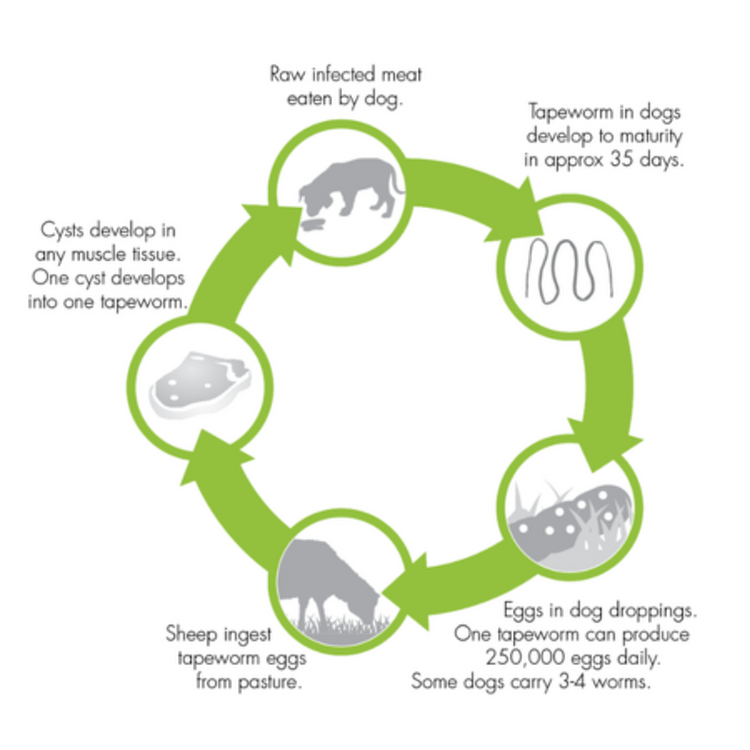
- Farm dogs with sheep: Monthly praziquantel for Taenia ovis.
Sheep Measles (Tapeworm) Prevention
- Tapeworm cycles between dogs (adult stage) and sheep/goats (larval cysts in muscle).
- Farm dogs or those visiting sheep properties should receive praziquantel monthly (we recommend Wormicide).
- Treat at least 48 hours before any exposure to sheep or goats.
- Never feed raw sheep or goat meat—freeze at –10 °C for 10 days or cook thoroughly to kill larvae.
Keeping your cat parasite-free
Protect your cat (and your family) from fleas, ticks, mites, lice, and worms with these simple steps.
Flea control
- Treat monthly for 3–4 months, then maintain ongoing doses.
- Treat your home with IGR spray (e.g., Pyriproxifen Indorex) and vacuum/wash bedding weekly.
- Fleas jump from host to host—regular prevention stops itching, hair loss, and infections.
Tick protection
- Use cat-safe spot-ons or collars year-round.
- Check after outdoor time and remove ticks promptly to avoid irritation or infection.
Worming protocol
- 2–12 weeks: Broad-spectrum wormer every 2 weeks (treat queen when kittens are 2 weeks old).
- 12 weeks–6 months: Monthly wormer.
- 6 months+:
- Outdoor, hunting, raw-fed, or homes with kids: every 3 months (use lungworm-effective product like Bravecto Plus).
- Indoor-only: every 6–12 months.

Your Pet Direct
- Keeping our pets flea and parasite-free not only ensures they maintain good internal and external health, but it also keeps other family members safe.
- Your Pet Direct is a convenient, cost-effective mail-order solution that ensures you never run out of worm and flea treatment.
How to sign up
- Email the team with your pet's details (name, breed, age, weight & if they are an indoor/outdoor/hunting cat) and we will provide you with a quote for the options best for them.
- Once you sign your pets up and organise payment, you will receive your treatments when it is due.
Need more advice?
Contact our team to discuss a customised parasite-prevention plan tailored to your pet’s lifestyle.